
(auto-translated from Dutch Dutch)
Jerzy Skoelowski\'s Andrzej Leszczyc Trilogy
Premiere: July 15, 8:15 & 10:15 hrs
The Andrzej Leszczyc Trilogy revealed the anticonformist and rebellious talent of the writer, director, actor and painter Jerzy Skolimowski, the enfant terrible of the 60s Polish Cinema.
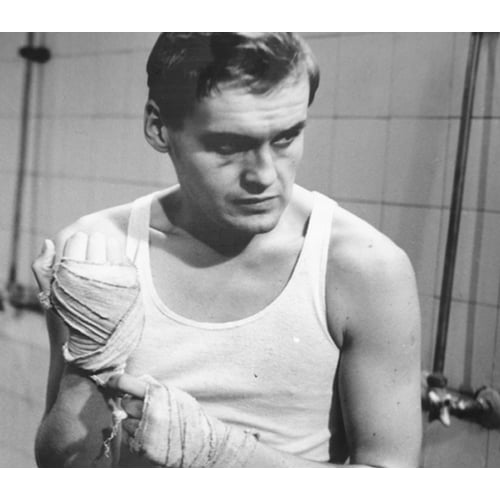
All three films are center around the roundabouts and chance meetings of rebellious student Andrzej Leszcyc. The young character, played by the director himself in the first two films, emerges as Skolimowski's alter-ego as much as a universal symbol of the rebellious and untamed youth forced to grow up within an oppressive social system.
The use of non-linear structure, dream-like images, jazz music, poetry and the loose style of narration of his films brings Skolimoswki\'s productions close to the French nouvelle vague and, more explicitly, to the work of Godard.
Identification Marks: None
dir. Jerzy Skolimowski (Poland, 1964, 71 min)
A young student called Andrzej Leszczyc decides to give up his studies and join the army. This decision is meant to cure the existential lack of fulfillment in his life so far. Before he reaches the station from where he will set off for his military unit, he spends the day mooning about town, running errands and finally meets a girl who could maybe change his mind.
Walkover
dir. Jerzy Skolimowski (Poland, 1965, 70 min)
A disillusioned Andrzej has just left the army when he meets an old acquaintance of his. Both are about to fight against tough opponents: his is a boxing fight while hers is a struggle to have her original project implemented at a large industrial facility. They both have to solve the same dilemma: whether to take on the fight, which looks to be unequal, or lose it (and - symbolically - also life) by default.
Barrier
dir. Jerzy Skolimowski (Poland, 1966, 77 min)
A student abandons his way of life and wanders, suitcase in hand, seeking a place in life, literally and metaphorically. Two attitudes clash in this character - resignation to adjust to life according to the generally accepted pattern and the remnants of youthful rebellion, the refusal to accept a dull life centered on making money.
Please see our website for the entire film program.
How to respond / more information
You must log in to respond